Maja Metera
November 27, 2025
Intersectionality in BDSM: How Identity Shapes Kink, Power Exchange, and Community

written by Micah Brown
If we’re going to start talking about intersectionality in kink, the first thing we should do is talk about what intersectionality is, what it isn’t, and how it’s evolved.
Intersectionality was a term that was first coined in 1989 by Kimberlé Crenshaw, but the ideas that it represents have existed long before then. What started out as a term used to discuss the the exclusion that black women faced in society at the time, it has since come to mean much more than that.
In 1990, Patricia Hill Collins wrote the book Black Feminist Thought where she discussed the “Matrix of Domination.” The Matrix and Intersectionality grew to become more closely linked, and brought into the meaning of the word the idea that oppression is experienced in a variety of ways through the interconnected nature of ethnicity, gender, age, and religion.
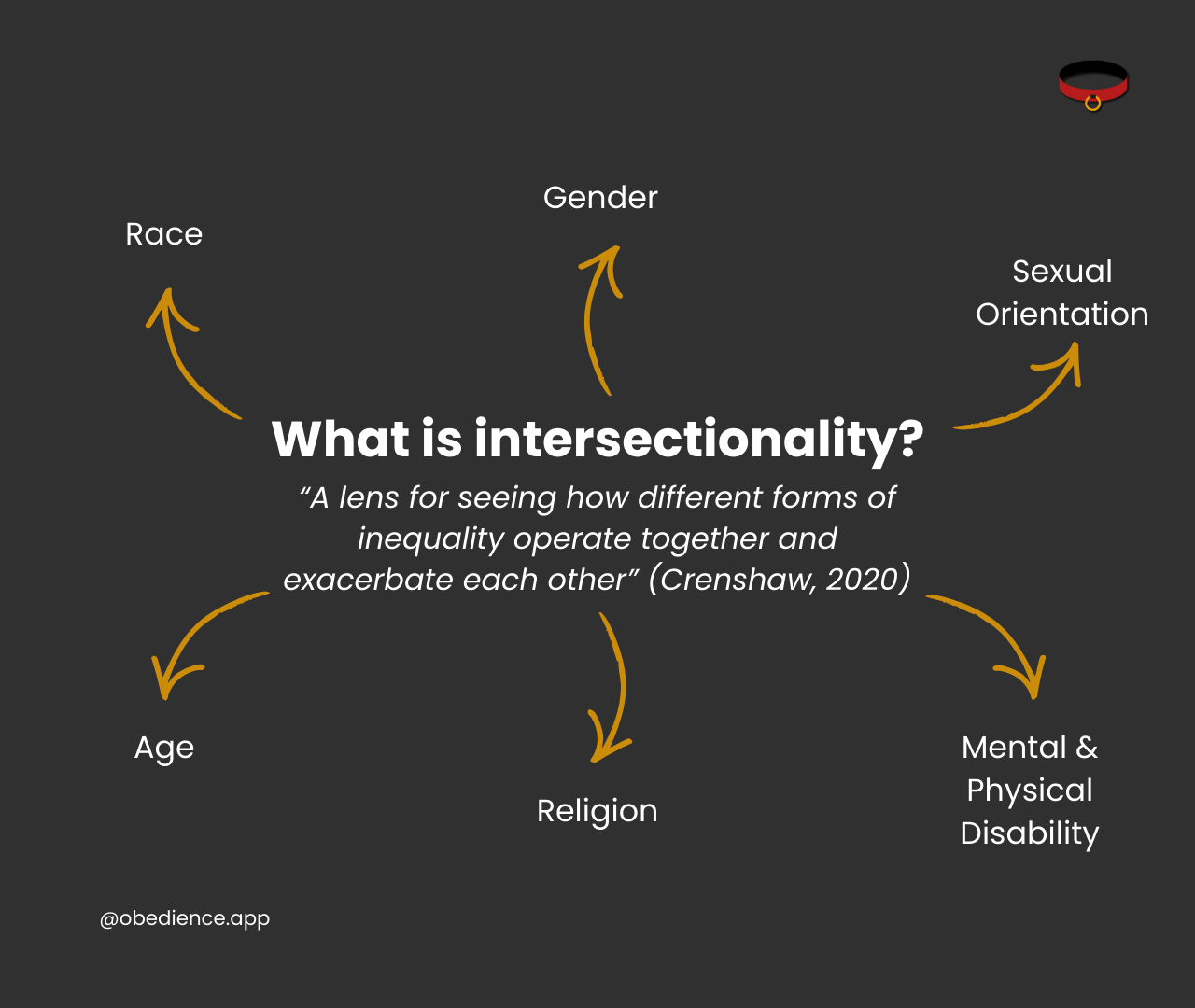
To quote Kimberlé Crenshaw, intersectionality is “a lens, a prism, for seeing the way in which various forms of inequality often operate together and exacerbate each other” (Crenshaw 2020).
Being able to understand and identify intersectionality within the kink community can help all of us better understand each other and where we may be coming from.
Examining Intersectionality Within Kink
If our hope is to find ways to better understand each other, then we must each understand that our experiences, our very existence, is shaped by a variety of intersecting personality traits. For many within the kink community, it is not just simply being kinky. A lesbian person of color is going to experience the community differently than a cisgender white male who will experience it differently from a trans gay male who will experience it differently from a gay male person of color. That doesn’t mean that because our experiences are different we will inherently not get along, but it does help to inform us how we may wish to approach each other within the scene.
How a white individual approaches the dynamic of Master and slave within kink is likely going to be far different than how a person of color may approach the same style dynamic. The same goes for gay, lesbian, and trans individuals who are involved in similar dynamics. How they experience the dynamic, what they refer to each other as, and how they handle common issues that arise from such a deep style of kink, are all valid.
Tensions may arise when there is a sense that there is only one correct way of having a dynamic and trying to push that onto others without taking the time to try and understand where they’re coming from and what their experiences are.
Fostering Inclusivity in Kink
The primary reason to spend any time looking at intersectionality within the kink community is to help foster and welcome diversity into our communities. Taking the initiative to create a sense of belonging for those who may not fit the common idea of what kink is.
This could mean holding workshops during kink gatherings to help others understand accept different ways of thinking and approaching kink. It may mean a field trip with your kink community somewhere that may help you understand the life experiences of those who may have had different experiences.
If you’re white, cisgender, and straight your lived experience is going to be far different others who do not fit into all of those boxes. How has your experience, how has your life, shaped who you are as a kinky individual? What experiences have you had that helped to guide you into the world of kink?
Think about these questions and then ask these question to people who are different from you and who may approach kink in a different fashion because of their experiences. Perhaps the reason for their tumbling into kink is entirely different from yours, and if so, it is entirely worth the time to talk to them and learn about how they got where they are in kink.
Fostering open communication between those in the kink community can only end up creating a more inclusive and welcoming environment. We don’t kink shame, and with that mindset, we shouldn’t be judging others on how they approach kink so long as they are being respectful of those around them.
Building a Welcoming Community
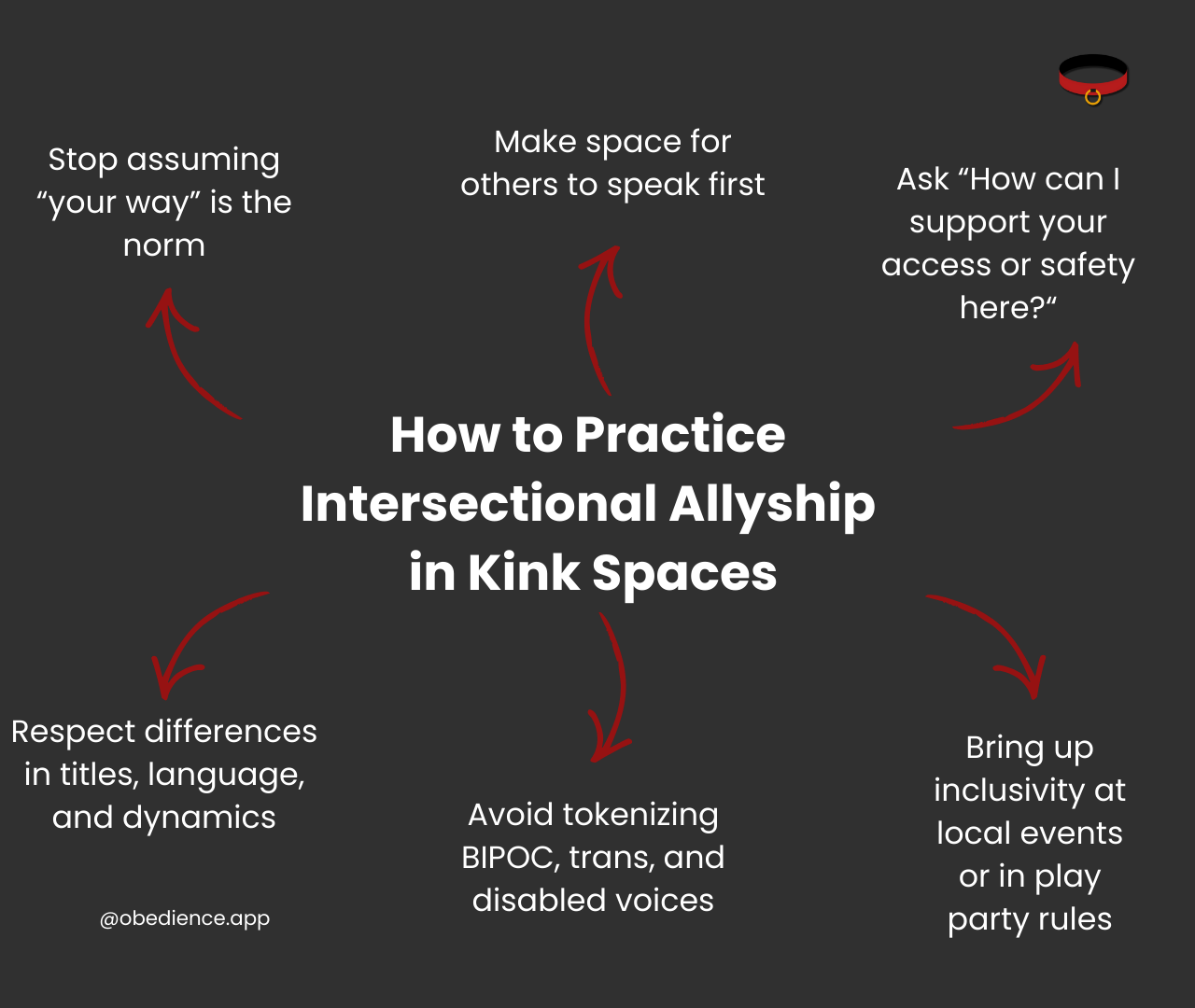
Find the organizers within your kink community and talk with them about intersectionality and creating a welcoming environment that touches on many of the issues that intersectionality brings up. Brainstorm ideas around how we can invite open discussion around topics such as race, experience, gender, sexuality, and kink and all of that informs the experiences that we have. Invite open sharing of experiences with a variety of people who come from different backgrounds and life experiences.
If there are munches in your area, perhaps having a munch that’s geared toward a workshop on intersectionality and creating welcoming environments within your kink community could be considered. If you want to go this route, look at resources that are available to you for beginning discussions around intersectionality. Many of the resources out there for vanilla discussions can be adjusted for the kink community.
Rounding it Out
Who we are is built upon our experiences and how they are perceived. People who have lived through the exact same events will not perceive them the same way because they have lived different lives and view the experience through different lenses. We cannot assume that how we see something or experience something is how the entire rest of the world sees and experiences the same thing. As a white, cisgender, straight male getting pulled over by the police is a vastly different experience for me than it would be for a person of color.
My experience as a Dominant in a 24/7 TPE will not be the same as somebody who is queer or even trans. Wherein my kink deeply incorporates sex and sexuality, others can be just as kinky and be asexual. Our kink won’t look the same and it shouldn’t. Building diversity both in kink and our social circles can only help to foster a better understand of ourselves and the world we live in.